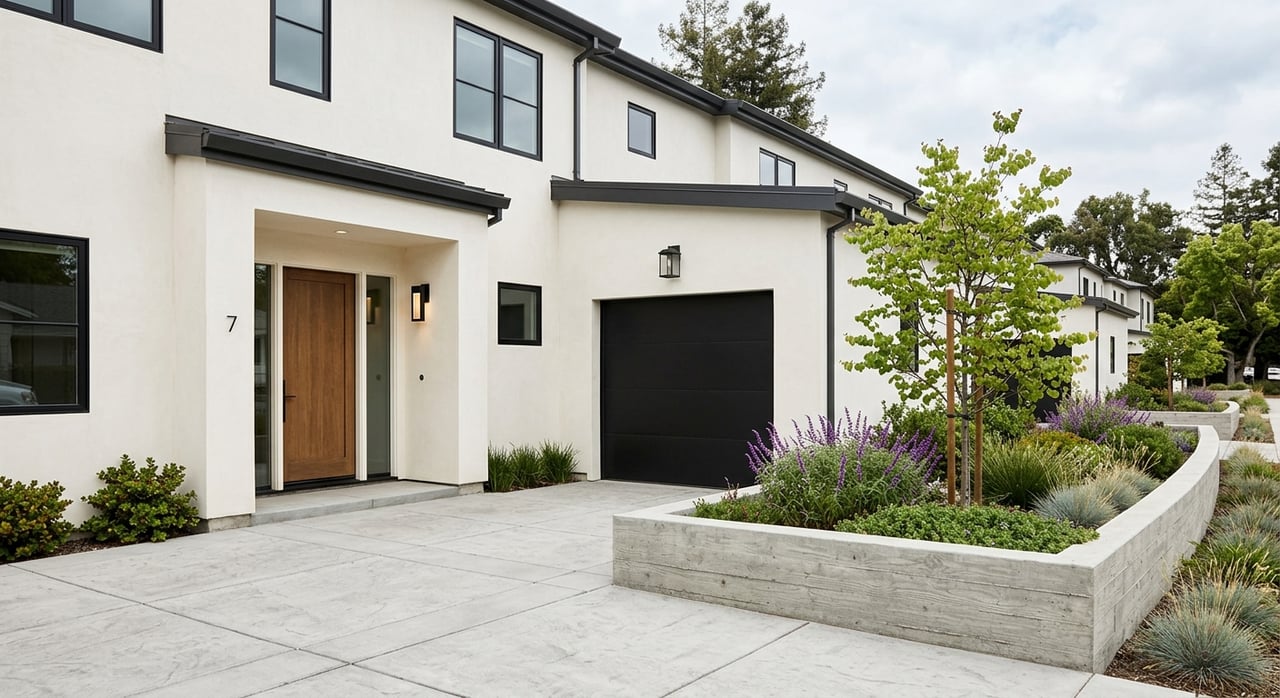
If you are trying to choose between a townhome and a house in Santa Clara County, you are not just picking a floor plan. You are deciding how you want to live, what you want to spend each month, and how much control you want over your property. In a fast-moving, high-cost market, that choice can shape your daily life for years. Let’s break down the tradeoffs so you can make a smart, confident decision.
Santa Clara County prices set the tone
In Santa Clara County, both townhomes and houses can attract strong competition. Redfin’s March 2026 county snapshot showed an overall median sale price of $1.68 million, with homes selling in about 10 days on average, a 104.9% sale-to-list ratio, and 65.7% of homes closing above list price.
That pace matters because it means you may not have much time to rethink your priorities once a good property hits the market. If you are choosing between a townhome and a detached house, it helps to settle your budget and lifestyle goals before you start touring homes.
The price gap between attached and detached homes is also significant. C.A.R. reported a March 2026 median sold price of $2.15 million for existing detached single-family homes in Santa Clara County. In a San José market update citing the Santa Clara County Association of Realtors, 2025 median prices were $1.68 million for single-family homes and $830,000 for the condo and townhome category.
That difference is why this decision often starts with one big question: do you want the features of a detached home, or do you want the best chance to stay in Santa Clara County at a lower entry price?
Townhome versus house starts with ownership
One of the biggest surprises for buyers is that a townhome is not always a distinct legal property type. According to the California Department of Real Estate, a townhome is an architectural style, not a legal ownership form. That means the listing label does not tell you the full story.
A townhome may be created as a condominium or as part of a planned development. The deed, governing documents, and CC&Rs tell you what you actually own, what the homeowners association controls, and which parts of the property count as common area or exclusive-use common area.
This matters because two homes that look similar can come with very different responsibilities. One may give you more direct ownership of the lot and structure, while the other may include shared property, HOA assessments, and rules about use and maintenance.
Why the legal structure matters
The California Department of Real Estate distinguishes standard subdivisions from common-interest developments. In a standard subdivision, you usually own the lot and building with no shared common area. In a common-interest development, shared property and HOA control often play a larger role.
A detached-looking home can still sit in a planned development with HOA-managed features and assessments. On the other hand, a townhome may feel private and spacious but still operate under condominium-style ownership rules. That is why reading the documents matters as much as walking the property.
Maintenance is lighter, not always hands-off
Many buyers are drawn to townhomes because they expect lower upkeep. That can be true, but low maintenance is not the same as no maintenance.
California Civil Code Section 4775 says that unless the governing declaration says otherwise, the HOA maintains common area, the owner maintains the separate interest, and the owner also maintains exclusive-use common area while the association handles repair or replacement. In plain terms, you still have responsibilities, even when the HOA takes care of part of the work.
That means a townhome may reduce your exterior workload, but it does not erase it. You should still ask who maintains patios, balconies, private yard areas, driveways, porches, and similar spaces before you make an offer.
What counts as outdoor space
Outdoor space can be one of the biggest decision points. The Department of Real Estate notes that exclusive-use common area can include private yard areas, driveways, parking spaces, patios, balconies, and porches.
So if a townhome comes with a fenced patio or small yard, that space may function like your own outdoor area without being fully private in the legal sense. You may be able to enjoy it every day, but you may also need to follow HOA rules about changes, appearance, or use.
Lifestyle differences you will feel every day
Price and ownership matter, but so does how the home feels once you move in. A townhome and a detached house can support very different routines.
Townhomes in California are typically two or more stories and are usually arranged so units are not stacked above or below each other. That layout often gives you more separation than a typical condo, but you still may share walls and have less privacy than you would in a detached home.
A detached house often gives you more space between you and your neighbors, more yard flexibility, and more freedom for storage, gardening, and future changes. That does not guarantee every house is HOA-free, but it often means fewer shared elements than an attached home.
You may prefer a townhome if you want:
- A lower purchase price than a detached home in the same market
- Less exterior maintenance
- Some outdoor space without taking on a large yard
- A chance to stay in Santa Clara County with a more manageable budget
You may prefer a house if you want:
- More privacy and fewer shared walls
- More control over the exterior and yard use
- More space for storage or future remodeling
- A property setup that feels less governed by shared ownership rules
Budget may decide more than preference
In Santa Clara County, budget is often the deciding factor. C.A.R.’s 2025 affordability index estimated that only 21% of county households could afford a typical home priced at $2.0 million, requiring about $505,600 in qualifying income.
That is a useful reality check for buyers hoping for a detached house. If your numbers do not comfortably support that range, a townhome may be the path that keeps you in the county without stretching too far.
This is where it helps to look beyond the sticker price. A lower-priced townhome may still come with HOA dues, while a detached house may come with higher purchase cost and more repair exposure. The better fit is the one that supports your full monthly payment and your stress level, not just your wish list.
A simple checklist for your decision
If you are weighing a townhome versus a house, use this checklist to narrow your choice:
- Monthly payment: What feels sustainable after mortgage, taxes, insurance, and dues?
- HOA dues: Are you comfortable with the cost and the rules that come with it?
- Maintenance tolerance: Do you want less exterior responsibility, or do you prefer full control?
- Privacy needs: How important are fewer shared walls and more separation?
- Outdoor space: Do you want a large yard, or would a patio or balcony be enough?
- Parking: Does the setup match your household’s day-to-day needs?
- Commute: Does the location support your routine if your budget changes the area you can target?
- Resale: Which property type has the broadest future appeal for your likely buyer pool?
- CC&R limits: Are there restrictions on pets, rentals, or exterior changes that would affect your plans?
This list can help you move from abstract preferences to practical decision-making. Often, the right answer becomes clearer when you compare how each option fits your real life.
When it makes sense to widen your search
If owning a detached house matters more than keeping a Santa Clara County address, expanding your search may open up more options. C.A.R.’s March 2026 county medians put detached homes at $2.25 million in San Mateo County, $1.36 million in Alameda County, $870,000 in Contra Costa County, $1.3 million in Santa Cruz County, and $775,000 in San Benito County.
That comparison is helpful because it shows San Mateo County is not the lower-cost alternative many buyers hope for. Alameda, Contra Costa, Santa Cruz, and San Benito counties may offer more price relief, though the tradeoff can include a different commute, different housing stock, and a different day-to-day lifestyle.
For many buyers, this creates a very practical fork in the road. You can choose a townhome in Santa Clara County, compromise on a detached home within the county, or look beyond the county for a house that better fits your budget.
The best choice is the one that fits your life
There is no universal winner between a townhome and a house in Santa Clara County. A townhome can be a smart solution if your goal is to stay in the county, lower your purchase price, and reduce exterior upkeep. A detached house can be worth the higher cost if privacy, yard space, and property control are your top priorities.
The key is to look past the label and understand what you are actually buying. Once you know the ownership structure, maintenance responsibilities, monthly cost, and lifestyle tradeoffs, you can choose with much more confidence.
If you want a thoughtful, pressure-free conversation about what fits your budget and goals in Santa Clara County or nearby Bay Area markets, Michelle Kennedy is here to help.
FAQs
What is the main difference between a townhome and a house in Santa Clara County?
- A townhome is often an attached home with shared walls and some HOA governance, while a house is more likely to offer greater privacy, more yard control, and fewer shared property elements.
Are townhomes in Santa Clara County always condos?
- No. In California, a townhome is an architectural style, not a legal ownership category, so you need to review the deed, CC&Rs, and development type to understand what you own.
Are townhomes more affordable than houses in Santa Clara County?
- Usually, yes. Research cited in the San José market update showed 2025 median prices of $830,000 for the condo and townhome category versus $1.68 million for single-family homes.
Do townhomes in Santa Clara County have less maintenance?
- Often, yes, but they are not maintenance-free. The HOA may maintain common areas, while you may still be responsible for your separate interest and some exclusive-use areas.
Should you choose a house over a townhome in Santa Clara County for more privacy?
- If privacy, fewer shared walls, and more exterior control are high priorities, a detached house is often the better fit, assuming it works within your budget.
Should you look outside Santa Clara County for a detached home?
- It may make sense if detached-home ownership matters more than staying in the county, especially since counties like Alameda, Contra Costa, Santa Cruz, and San Benito had lower detached-home median prices than Santa Clara County in March 2026.