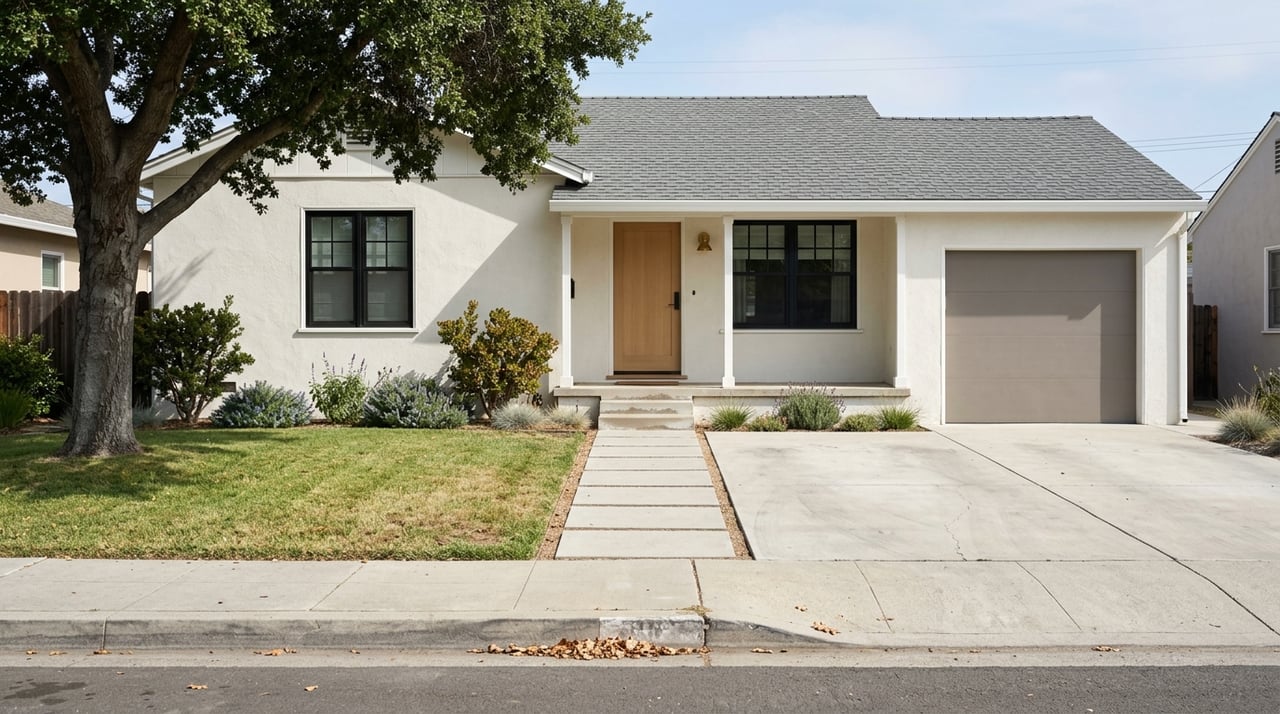
Trying to choose between a shorter commute and a home with more room? In Santa Clara County, that tradeoff is real, and for many buyers, it shapes almost every part of the home search. If you are weighing access to job centers against square footage, yard space, or a detached home, the good news is that the county offers a wide range of options. This guide will help you think through that balance with a clear, practical framework. Let’s dive in.
Why this tradeoff matters in Santa Clara County
Santa Clara County is both a major employment hub and a high-cost housing market. In the 2020-2024 ACS period, the county had about 1.17 million jobs, a mean one-way commute of 26.2 minutes, and a median owner-occupied home value of $1.49 million. That means where you buy can affect both your daily routine and your housing budget.
The county also has a diverse housing mix. Housing-element data shows about 51.7% single-family detached housing, 35.8% multifamily, 9.7% single-family attached, and 2.8% mobile homes. In practical terms, you are not choosing between only dense urban living or only suburban space. You are choosing how much density, travel time, and home size feels right for your life.
What closer-in buying often looks like
If your top priority is keeping your commute shorter, you will likely focus on closer-in communities such as Santa Clara, Sunnyvale, Mountain View, and Cupertino. These cities sit in a tight commute band of about 22.6 to 23.6 minutes, based on mean commute times. Their median owner-occupied home values range from about $1.58 million to $1.93 million.
That shorter commute often comes with tradeoffs in lot size, price, or housing type. You may find yourself comparing a smaller detached home with an attached home, townhouse-style layout, or infill development. The benefit is easier access to major job corridors and, in many cases, transportation connections.
Closer-in does not automatically mean condo-only living. Santa Clara still reports 42% detached housing units and 55% multifamily, while Campbell’s 2020 housing stock was 45.1% single-family detached. That mix gives you more options than many buyers expect, even when you stay near core employment centers.
Land use shapes the housing mix
Santa Clara’s land-use approach helps explain the pattern you see across much of the South Bay. Very-low-density areas are intended for detached homes with yards, while higher-density housing is generally planned near transportation corridors and transit. For you as a buyer, that usually means the closer you want to stay to job centers and commute infrastructure, the more likely you are to consider attached or infill housing along with detached options.
Why San Jose is often the middle ground
For many buyers, San Jose becomes the compromise choice. Its mean commute is 27.3 minutes, which is a bit above the closest-in cities but still within a range many households find manageable. Its median owner-occupied home value is $1.233 million, which can make it an important part of the conversation when budget and location both matter.
Transit access also plays a role here. BART currently reaches Berryessa/North San Jose, with VTA bus connections into Downtown San Jose and Diridon. VTA also says Phase II is intended to extend BART to downtown San Jose, Diridon, and Santa Clara.
If your schedule is hybrid or your workplace gives you some flexibility, San Jose can open up more choices. Instead of focusing only on drive time, you may be able to evaluate how a mix of driving, rail, or local transit fits your week.
What farther-out buying can offer
If space matters more than shaving every possible minute off your commute, Morgan Hill and Gilroy often stand out. Morgan Hill has a mean commute of 33.5 minutes and a median owner-occupied home value of $1.21 million. Gilroy has a mean commute of 33.3 minutes and a median owner-occupied home value of $1.03 million.
Those cities shift the balance toward detached housing. Morgan Hill’s housing stock was 59.0% single-family detached in 2020, and Gilroy’s 2021 housing stock was 69.8% single-family detached. If you want a detached home to be central to your search, these farther-south communities may align better with your goals.
Planning documents reinforce that pattern. Morgan Hill includes Residential Estate areas for relatively large parcels and Residential Detached Low areas for suburban single-family homes. Gilroy’s land-use map also identifies single-family detached homes and accessory units as appropriate residential uses.
Space needs may point south
Household size trends add useful context. Mountain View averaged 2.33 persons per household and Sunnyvale averaged 2.54, compared with 3.02 in Morgan Hill and 3.34 in Gilroy. That does not define any one neighborhood or household, but it does suggest that larger-household living patterns are more common in the south county markets.
If you need more bedrooms, more storage, more outdoor space, or simply a layout that supports a growing household, this can be an important clue. It suggests where the market may naturally offer more of the home features you are trying to prioritize.
Use a commute ceiling first
One of the most practical ways to narrow your search is to set a commute ceiling before you fall in love with listings. A commute-first buyer may want to stay in the 22.6 to 27.3 minute range and focus on central or transit-connected locations. A space-first buyer may be comfortable in the 33-plus minute range in exchange for more detached-home options and larger lots.
This approach can save you time and reduce decision fatigue. Instead of searching every city in the county at once, you can focus on the range that supports your actual weekday routine. That makes the search more realistic from the start.
Think in housing types, not just city names
City names matter, but product type can matter just as much. In Santa Clara County, it is often more useful to compare homes by categories such as:
- Detached vs. attached
- Multifamily vs. single-family
- Transit-oriented vs. auto-oriented
- ADU-capable vs. not
Santa Clara’s land-use classifications are a helpful model because they clearly separate detached homes, townhouse and rowhouse forms, apartments, and transit-oriented categories. That kind of framework can help you search with more clarity, especially if you are open to more than one city.
Transit can expand your options
Commute decisions are not only about distance. They are also about how many ways you can get where you need to go. For transit-sensitive buyers, Caltrain serves Santa Clara, San Jose Diridon, Mountain View, Sunnyvale, Morgan Hill, San Martin, and Gilroy, while Berryessa/North San Jose is currently the county’s southernmost BART station.
That means some homes that seem farther out on a map may still work well for a mixed-mode commute. If your office destination, schedule, and tolerance for transfers line up, transit access can make a wider home search possible.
A simple way to balance both goals
When buyers feel torn between commute and space, I often suggest focusing on what is hardest to change later. Commute time is usually the least flexible part of the equation. Square footage, bedroom count, yard size, and some interior features can be adjusted more easily during the search.
That does not mean you should ignore space. It means your best result often comes from starting with your office cadence and daily routine, then identifying the home features that matter most within that boundary. Once you know your acceptable commute band, the tradeoffs become much easier to compare.
A helpful short list might include:
- Your maximum comfortable commute on office days
- How many days each week you travel to work
- Whether transit is realistic for your route
- Your preferred housing type
- The home features you truly need vs. those that are nice to have
Putting your Santa Clara County search into focus
Santa Clara County offers real variety, but that variety works best when you approach it with a plan. Closer-in communities may support shorter average commutes, but often with higher prices, smaller lots, or more attached housing. Farther-out communities may offer more detached-home opportunities and space, but with longer average travel times.
If you are relocating within the Bay Area or trying to make a smart cross-county move, this kind of tradeoff deserves a thoughtful, personalized look. The right answer is not the same for every household. It depends on how you live, how often you commute, and what kind of home will serve you well for years to come.
If you want help narrowing your options in Santa Clara County and comparing locations with your daily routine in mind, Michelle Kennedy is here to guide you with patient, practical advice.
FAQs
What is the average commute time in Santa Clara County?
- Santa Clara County had a mean one-way commute of 26.2 minutes in the 2020-2024 ACS period.
Which Santa Clara County cities may offer shorter commutes?
- Santa Clara, Sunnyvale, Mountain View, and Cupertino were in a mean commute range of about 22.6 to 23.6 minutes based on the research report.
Which Santa Clara County areas may offer more space?
- Morgan Hill and Gilroy tend to shift the tradeoff toward more detached housing and potentially more space, with mean commutes of about 33.5 and 33.3 minutes, respectively.
Is San Jose a middle-ground option for buyers?
- Yes. San Jose can be a practical middle ground, with a mean commute of 27.3 minutes and a median owner-occupied home value of $1.233 million.
Does transit matter when balancing commute and space in Santa Clara County?
- Yes. Caltrain serves several Santa Clara County communities, and BART currently reaches Berryessa/North San Jose, which can make some locations more workable for mixed-mode commutes.