"I don't see the IPO as the starting gun of a new race," a San Francisco agent told the San Francisco Chronicle this month. "I see it as … we're probably already at the 50-yard line."
Anthropic began trading on Nasdaq on Nov. 19 at $83 a share, which values the company at about $1.5 trillion. A week later, if you're comparing San Francisco neighborhoods, the IPO date is less useful than the schedule around it. The money behind this market is arriving in stages, and each stage has reached different parts of the city at different times. The luxury single-family districts took the early money. The condo neighborhoods near AI offices have lagged, and that's where the next release, expected in February, has the most room to show up.
The money arrived before the IPO did
Employees didn't need a public listing to buy homes this year. The Chronicle reported that many AI workers had already turned stock into cash by borrowing against their shares or selling them through company-approved tender offers. The sale results show where that cash went.
In St. Francis Wood, 135 San Benito Way listed at $4.5 million, drew six offers, five of them all-cash, and sold for $6.6 million about 20 days later, according to the Chronicle. In Presidio Heights, 20 Cherry St. listed for $18.5 million on Oct. 2 and closed at $28.5 million on Oct. 22. Near the Presidio, 2 Sixth Ave. listed at $8 million and sold for $15 million in early October, the Chronicle reported. A few blocks from Cherry Street, 3501 Jackson St. sold off-market for $21 million in June and came back at $19.9 million after a minor face-lift. It went into contract the day after listing and closed for more than $4 million over asking, the San Francisco Standard reported.
The citywide figures point the same way. The California Association of Realtors put San Francisco's single-family median at $2.39 million for October 2026, up 29.2% from October 2025. Homes spent a median 26.5 days on market, and unsold inventory came to 1.2 months. The September report had a $2.054 million median, 21 days and 1.6 months of inventory. In an MLS analysis it published Nov. 20, the Standard found October single-family prices up 29% year over year overall and up 39% in the most expensive quarter of sales.
The most expensive homes rose ten points faster than the market as a whole, and that's the tier the early money reached.
The schedule from here
Anthropic didn't use the usual single six-month lockup. Reporting from Reuters and the Standard says many non-founder employees could sell up to 10% of their holdings on the first trading day and another 35% after the company reports its 2026 results. The Standard expects that report in February.
| Stage | Timing | Where the reporting places it |
|---|---|---|
| Tender offers and stock-backed borrowing | Through 2026, before the IPO | Luxury single-family sales in Presidio Heights, St. Francis Wood and near the Presidio |
| First 10% of employee shares | From Nov. 19, 2026 | Too soon for closed sales to reflect it |
| Another 35% of employee shares | After 2026 results, expected February 2027 | Agents expect more competition once the cash is in hand |
San Francisco agents disagree about how much the February release will add. One agent told the Standard he expects more competition once newly minted millionaires can bid without borrowing against their equity. He added that some may be waiting in the rental market until they know what they have. Another agent in the same story recalled that "nothing much happened to the real estate market at all" right after Facebook's IPO, because the gains were already priced in.
The rental market gives some support to the waiting theory. The Standard reported that millionaire renter households in the San Francisco metro grew 273% from 2020 to 2024, from 499 to 1,863, as affluent renters kept their money liquid. One example: a 773-square-foot one-bedroom on the 23rd floor of Millennium Tower was bought for $660,000 in August and leased to an AI worker for $10,000 a month starting Nov. 1, according to the Standard.
The lag is in condos
If the early money went to the top of the single-family market, the next question is which part of the market hasn't caught up. The Chronicle reported that luxury homes in San Francisco and San Mateo counties, the top 5% by price, had a median near $7.5 million from July to September 2026, up 23% from a year earlier. Typical homes in the San Francisco area hit a record $1.6 million median in September 2026, up 6.5% from 2025. The same story cites a 2019 study that found IPOs raise demand for high-priced homes near a company's headquarters but not for low-priced ones.
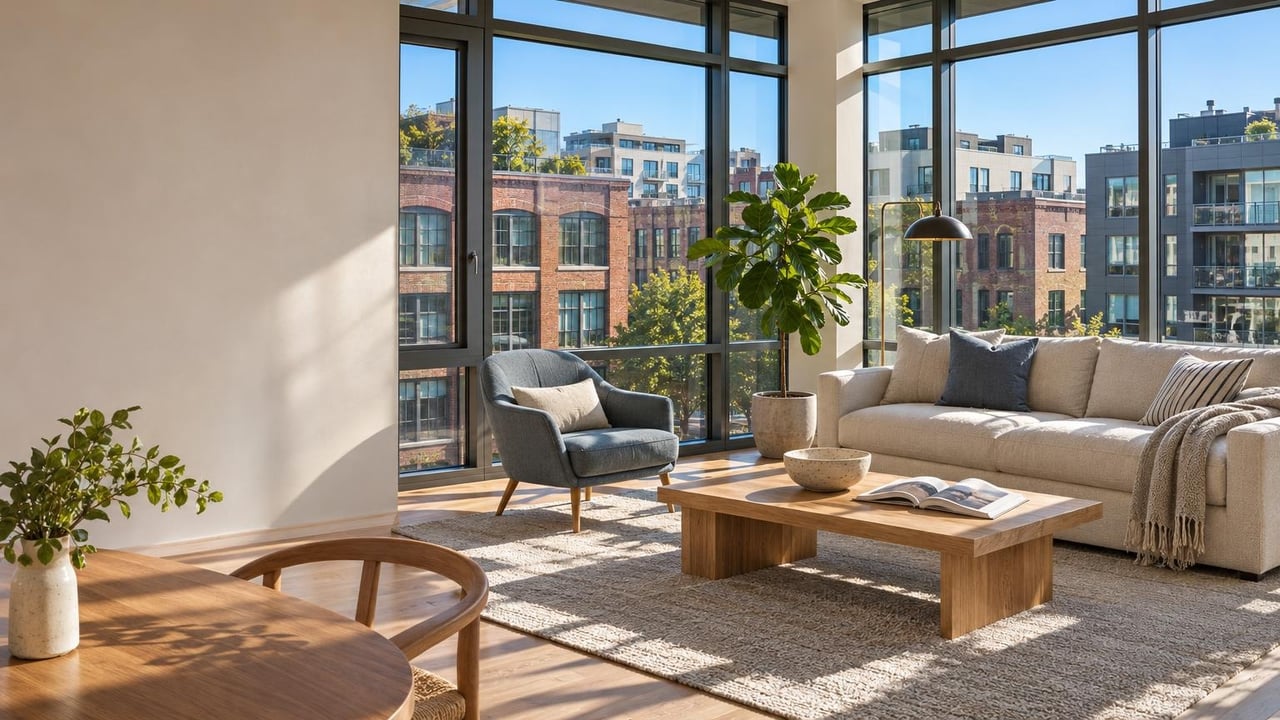
Condos have room to move all the same, and the demand is concentrated in a few districts. An agent told the Standard that condo appreciation has lagged single-family homes and could rise more steadily after the IPO. He said interest is already strong close to AI offices in Dogpatch, Potrero Hill, Mission Bay and South Beach. The same story places Anthropic's office in SoMa. The Chronicle also heard from an agent whose team has seen more people buying condos and smaller single-family homes, worried they won't get a foothold after the IPOs.
You can see the competition starting. Nearly three-quarters of San Francisco condos sold in the first three weeks of October went above asking, the Chronicle reported. For single-family homes in September, 92% sold above asking, and only 240 were listed at the end of the month. Condos are competitive, but they haven't reached the point where nearly everything sells over asking.
Within those districts, the blocks don't all move together. In September the Standard described Fifth Street as SoMa's dividing line: east of it, big office leases and condos selling after years of stagnation; west of it, a slower recovery. The 25-story 415 Natoma at Fifth and Mission was almost entirely vacant. The high end of the market is also spreading. The Standard reported that luxury prices have moved beyond Pacific Heights, Presidio Heights and Sea Cliff toward Potrero Hill, Mission Bay and Hayes Valley. A Potrero Hill home met its $10 million asking price in September, a neighborhood record.
Choosing between winter and spring
For a buyer, all of this comes down to timing and where to look. A search in December or January competes mostly with buyers whose money was already in hand: tender-offer sellers, people who borrowed against their stock, and buyers paying cash. That last group is large. One in three San Francisco homes sold between Jan. 1 and Sept. 1, 2026 went to an all-cash buyer, according to Old Republic Title records reported by the Standard, and the share was higher for luxury listings and condos. A search that starts after February may face that same group plus anyone the 35% release turns into a cash bidder.
The stock price can change that math. In the months after Uber went public in 2019, its stock fell sharply, and agents told the Chronicle that a similar drop for Anthropic or OpenAI would cool the housing market. The Standard's history chart shows bidding fell after the Uber and Lyft IPOs, which came while the market was cooling, and jumped after Facebook and Coinbase went public into a heating market.
If you're shopping for a single-family home in the west-side or northern districts, this year's prices already include a lot of the AI money. If you're looking at condos in Dogpatch, Mission Bay, South Beach, Potrero Hill or eastern SoMa, you're in the part of the market that local agents expect to absorb the next stage. One agent in the Standard expects measured gains there in 2027 and 2028 rather than continued double-digit appreciation. Either way, the February earnings report is the date to plan around.
Quick answers
Did San Francisco home prices jump the week of the IPO? Closed sales lag contracts by weeks, so the most recent figures, October's single-family median of $2.39 million from C.A.R. and the Standard's October MLS analysis, describe the market before the Nov. 19 listing.
Which neighborhoods have absorbed the most AI money so far? The biggest reported sales this fall were in Presidio Heights, St. Francis Wood and near the Presidio. Pacific Heights and the Marina saw some of the sharpest price increases, according to the Chronicle.
Is February a firm date? The 35% release is tied to Anthropic reporting its 2026 results. The Standard expects that in February, and the date belongs to the company.
If you're deciding whether to make an offer this winter or wait for spring, and whether a condo near the AI offices or a house across town fits your plans better, Michelle Kennedy will go through recent sales in the neighborhoods you're considering and help you set a timeline that fits your plans. Let's talk about your home and schedule a personal consultation.